Activists by Necessity
Our five-year campaign successfully secured Affordable Rent social housing for many evicted tenants on the redeveloped Wordsworth Drive and Sugar Hill Close estate. We may not have saved the original Airey prefab houses, but we demonstrated that organised tenant action can challenge powerful developers and protect communities.
Save Our Homes LS26 residents weren’t experienced activists when we started out – just housing-insecure tenants facing eviction. But we learnt so much throughout the campaigning years, and I’m keen to share what worked. On this page, you’ll find suggestions and tips that might help your tenant community fight eviction.
NAVIGATION:
- TL;DR – QUICK START CHECKLIST
- WE ORGANISED AND FORMALISED
- WE SUSTAINED ATTENTION
- WE BUILT A NETWORK
- WE RESEARCHED THE LAW
TL;DR – QUICK START CHECKLIST
Support networks and communication are key in any housing crisis. When facing eviction or a housing threat, get these key things rolling in the first weeks and months and it will help build momentum:
- Hold initial residents meeting
- Set up group communication channels – e.g. WhatsApp, Facebook group (private first, public later)
- Contact local councillors, MP and any local activist or housing rights groups – ACORN, Renters Unions. Ask them to help you understand your rights.
- Form action group and identify goals and main spokespeople*
- Launch public campaign and media outreach
*If there’s a chance this might turn into a bigger/longer fight that requires resources:
- Formalise action group with elected roles for accountability
- Draft constitution and open bank account if required for fundraising
WE ORGANISED AND FORMALISED
~ Coming Together in Crisis
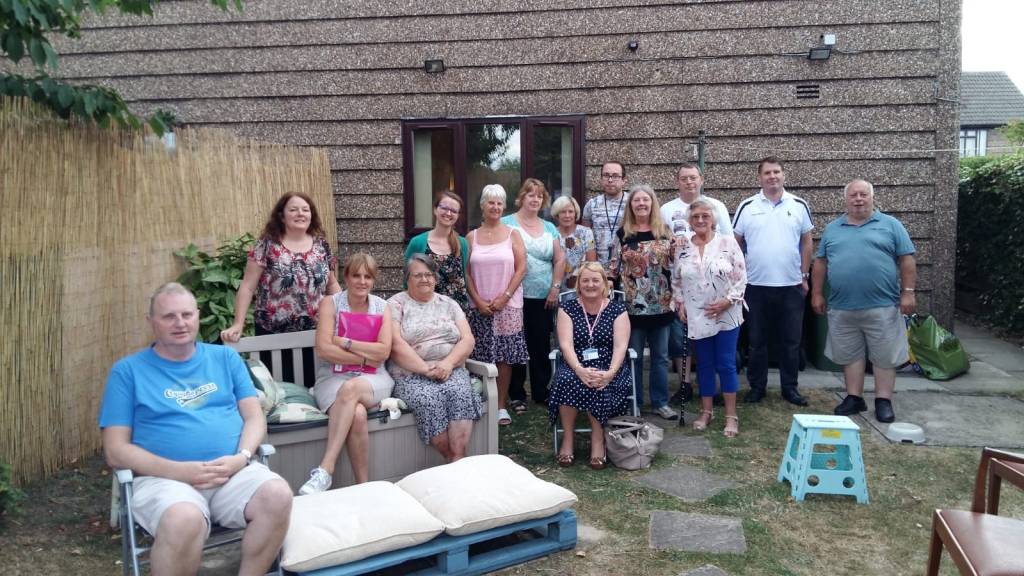
Shortly after Wordsworth Drive and Sugar Hill Close residents heard about the intended planning application to redevelop the estate, we organised several meetings. Residents wanted to fight eviction and demolition rather than just move out. Initially council officers simply recommended we join the council house waiting list. Realising we weren’t going anywhere, elected councillors soon advised us about how to formalise.
How to Identify Supportive Representatives:
- Look up your local councillors at your council website
- Check their voting records on housing issues
- Approach multiple representatives across parties
- Ask “What can you do to help us organise effectively?”
We were proactively supported by local Labour and Lib Dem councillors who joined events, advocated for us at meetings, and advised on tactics (shout out to Labour’s Karen Bruce and Lib Dem’s Stewart Golton). Our local Tory MP Alec Shelbrooke at least responded to correspondence and forwarded concerns to relevant parties. Interactions between party reps sometimes dissolved into political point scoring, but I think we mostly managed to stay above the fray.
TIP: Elected councillors and MPs are your representatives and should step up to support you if you face housing insecurity. You don’t need to be affiliated with their political party to request guidance (you don’t even have to like the party they represent!). Contact them as soon as you learn about threats to your housing.
~ Creating a Residents Action Group
Around a month after residents received their first warning of impending eviction, we set up the Save Our Homes LS26 Residents Action Group and elected a committee. Then the committee agreed on a constitution. We sensed there would be a lot to do to fight our landlord’s planning application (though didn’t realise at the time quite how much!).
Key roles for Save Our Homes LS26:
- Chair: Led meetings, represented group publicly (Cindy Readman)
- Vice Chair: Supported chair, handled things in their absence (Mark Field)
- Secretary: Took meeting minutes, managed correspondence and organised campaign materials (John Readman)
- Treasurer: Handled finances, banking, receipts (Susan Gould)
- Media Coordinator: Managed social media and press contact (Hazell Field)
TIP: Even if you only have 5-10 active residents, elect people to specific roles and be clear about who is doing what and what additional support each role might need. This creates accountability and can prevent the burnout of any one person.
Constitution Essentials: Within a few months, the Save Our Homes LS26 Residents Action Group also agreed a constitution. A constitution or agreement is useful and important for small community groups, even activist ones, because: a written understanding helps everyone stay on the same page to get jobs done; it’s a reference document and helps resolve conflicts; and banks and donors will want proof that your group is democratic and accountable.
Template and guidance available: See the Resource Centre Constitution Guide. A constitution doesn’t need to be long. Ours contained five brief sections:
- Objectives: What we were fighting for;
- Committee Structure: What roles constituted the committee;
- Elected Members: Individuals responsible for agreed roles;
- Democratic Procedures: How decisions would be made, meeting frequency, how we planned to keep residents informed;
- Financial Arrangements: Banking, spending decisions, transparency.
Residents can still take an active part in campaigning, even if they do not have an official role. All forms of participation, even limited, should ideally be acknowledged in some way, to keep momentum and spirits high.
TIP: Agree private communication channels early on – WhatsApp, Facebook, etc – so everyone knows how and where to keep updated.
For Save Our Homes LS26, a private Facebook group page was very effective. We took guidance from local Labour reps that the private group page should have multiple admins for post approval and an agreed “code of conduct” outlining the importance of civil communication. Discussion can get heated sometimes and this visible code was a good reminder to not make things personal.
This private Facebook group proved essential for sharing information when the landlord or other decision-makers gave confusing or incorrect information – we could cross-check things with each other.
Exposing inconsistencies: for example, at one point, the landlord stated to SOHLS26 that all post-2017 tenants knew their tenancies would be very short-term given the pending planning application. According to the managing agent, the landlord had required all new tenants to sign a declaration of agreement on this point before taking up a tenancy. HOWEVER after checking with new tenants directly via Facebook, this turned out not to be true. Some new arrivals had no idea they would likely be evicted in a few short years. None recalled signing an agreement.
~ Managing Finances
After a few months, we set up a community bank account, which allowed us to legitimately raise and manage funds essential for later legal fees. Funds also contributed towards:
- Campaign website hosting
- Transport to advocacy meetings
- Poster materials, printing
- Legal fees
TIP: Open a community bank account requiring three signatories. Banks usually require two signatories but having three means you can still authorise things even if one signatory is away. Keep detailed records – funders and supporters want transparency.
Fundraising: We raised funds in a variety of ways: tombola stalls at local fairs (mainly possible in summer), running a JustGiving fundraising campaign, and through generous donations from indidviauls and organisations with links to the cause (e.g. the National Union of Mineworkers, Unite, and other activist groups). Every penny really helped.
Be sure to take photos for social media and thank-you messages!
WE SUSTAINED ATTENTION
Grabbing and maintaining attention can be difficult and time-consuming. Traditional media organisations often aren’t interested unless there’s a big hook to the story that relates to their editorial agenda. But, there are ways to build momentum. Here are some of the things we did:
~ Marches and Protests
Helped by local councillors, activist organisations and other residents, Chair Cindy and the committee organised local marches as well as marches and protests through Leeds. The local marches in Rothwell were specific to our cause, but some of the Leeds ones were for broader social justice issues. We had large banners to grab attention and t-shirts made. This ‘branding’ helped us stand out at local fairs. Resident Wendy Richardson sorted banners and posters for our fences and houses. This helped show visitors to the estate what was happening, and the strength of community feeling.
Planning Successful Demonstrations:
- Choose symbolic locations (council offices, developer headquarters)
- Invite local media 48 hours ahead
- Consider whether you need to notify police in advance (for marches with large numbers)
- Create clear, readable banners and signs
- Plan 30-60 minute duration maximum, with an end point in mind. Closing speeches can be effective.
TIP: Political organisations like Labour Party, ACORN and trade unions have demonstration experience. Ask for guidance on logistics, permits, and safety. They may even come out to support your march! ACORN were fantastic. We were also contacted by Sisters Uncut who saw our campaign and provided much-needed solidarity in our Leeds protests.

~ Media Engagement
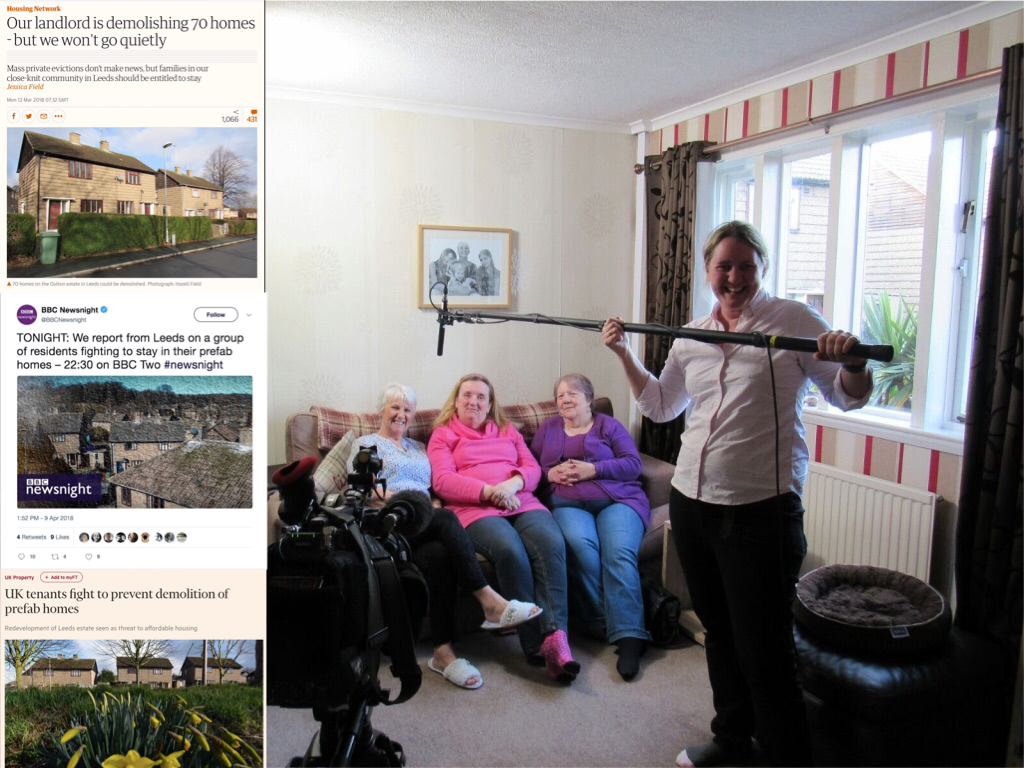
We engaged with every level of news media (see our Media page). Part of this came from the snowballing effect of news reporting – stories that gained a lot of local traction then seemed like a worthwhile news story at the national level. Cindy and Hazell, as Chair and Media Coordinator, always shared any developments with all news contacts via Twitter and direct emails.
Build Your Contact List:
- Community: Local newsletters, neighbourhood Facebook groups
- Local: City papers, online news outlets, local radio, community magazines
- Regional: County newspapers, regional TV news
- National: Mainstream digital news platforms, TV news programmes, current affairs programmes, and national commentary pages.
TIP: The longer your media contact list, the more messages to send – but also the greater your reach. Start local and work outward.
Resident Interviews and Human Stories
It’s necessary to put faces to news stories – even if that’s not always comfortable for residents. One of our campaign strengths was that so many residents were willing and able to invite journalists into their homes: Mavis and Barry, Cindy and John, Hazell and Mark, Susan, Linda. It helped highlight the human element of the housing scandal. (See our Campaigners page).
TIP: Not everyone wants to be public, and that’s perfectly ok. If they still want to be represented in some way, you can include their experiences through anonymised data or anecdotes if they’re happy for that – e.g. “X households rely on food banks” or “Y children would have to change schools” or “one pensioner has experienced xyz”.
~ Social Media Visibility
Our Residents Action Group had a dedicated social media coordinator from the outset, Hazell Field, who took primary responsibility for Tweeting the heck out of every twist and turn of our campaign as well as visually documenting developments.
Twitter/X was the main platform for our public advocacy and was particularly successful for:
- Direct advocacy to politicians and journalists
- Building support networks with other campaigns
- Real-time updates during key meetings/decisions
- Fundraising promotion
Facebook was essential for local campaign messaging and fundraising. When we were fundraising, it also proved effective for individuals to share the JustGiving link via their Facebook profiles and on local Facebook groups.
TIP: Create dedicated campaign accounts separate from personal profiles but be sure to have multiple residents share every post to amplify reach. Post frequently.
This WordPress website also provided an invaluable platform to share longer form updates via our blog page, and served as a home for in-depth research and profile pieces. Much of this content was read by journalists and used to help inform their journalism. It was set up on WordPress and the domain name and hosting currently cost around £65 per year to run, but free options are available.
TIP: I learned the hard way that it’s essential to be organised with images, documents, and writing. Find a systematic way to save and name all photos and attachments from the campaign, for easy reference whenever you need them.
~ Finding Your Campaign’s USP
All experiences of housing insecurity deserve attention and need recording. But we’re in an attention economy, making visibility a challenge.
Look for aspects of your housing story that make the case stand out in a sadly crowded news field. We had the coal mining community history and the architectural heritage of post-War prefab homes (see: History of ‘Cardboard City’) as well as the human-interest element of low-income families and pensioners vs. profit-driven development.
Dig deeper:
- Research your building/area history (local archives, libraries)
- Document resident demographics and circumstances
- Identify architectural or cultural significance
- Connect to broader housing crisis narratives
- Highlight any environmental or accessibility issues
TIP: Every building has history, every community has stories worth telling. Don’t wait for journalists to find these angles – research and present them proactively.
~ Creative Partnerships
We were contacted by Leeds filmmaker Alfie Barker and Cosmosquare team, who created the award-winning documentary short “Hanging On” about our campaign. Watch it on our film page, if you haven’t seen it already! There are so many benefits to the creative documentation of housing insecurity. It can:
- Reach different audiences than traditional media
- Create lasting record of your campaign
- Be more emotionally engaging than news reports
- Be shared long after immediate crisis
Importantly, it can really make you and your community feel seen and heard, and give you a positive experience in the midst of an eviction trauma. My dad, Mark Field, was a poster boy for Hanging On and the whole experience ended up being one of his proudest moments.
Again, don’t wait to be contacted.
Proactive Creative Outreach:
- Contact local film/media students and departments
- Reach out to community arts organisations
- Connect with documentary makers and playwrights focusing on social issues
- Contact photographers documenting social change

WE BUILT A NETWORK
We would not have built or sustained such momentum without the active involvement of a range of political, trade union, housing rights, and social justice organisations. Here are just a few:





Many individuals with housing justice interests or professional experience played an essential part: John Davies from Hands Off Our Homes, Jay from Judicial Domicide, John Lynch, Bob Ward and many others. Labour, Lib Dem, and Independent Councillors also gave a lot of time and support.
Loads of people and organisations also got in touch behind the scenes (via this website and social media DMs) to generously offer a range of support and services including community housing activist training (New Economics Foundation), research (various academics), and lessons learned from their own campaigns (like saving the Foxhill Estate in Bath).
Tips for building relationships:
- Attend other campaigns’ events: Show solidarity, learn tactics
- Invite allies to your events: Build reciprocal relationships
- Share each other’s social media content: Amplify messages
- Coordinate joint actions: Greater impact, shared resources
- Provide mutual support: Offer advice to newer campaigns
- … at the very least: Acknowledge offers of support with a thank you message.
Similarly, tips for maintaining your network:
- Send monthly updates to all allied organisations
- Attend relevant conferences and meetings when possible
- Share campaign materials and resources
- Acknowledge support publicly and often
- Celebrate others’ victories alongside your own
TIP: Lots of people and organisations might get in touch with offers of support and solidarity at the same time, which can feel overwhelming (in a positive way!). Work out a system to record who/what/when details, and respond asap with a quick ‘thank you’ message to acknowledge receipt and keep channels open. I did not do this as often as I should have, and undoubtedly missed out on key support.
WE RESEARCHED THE LAW
The law around planning, renting and tenant rights is really complicated. This website does not offer legal advice. However, here are some essential online resources that helped us with challenging the eviction and writing more effective eviction-based objections to planning:
- GOVERNMENT GUIDANCE on the Homes Fit for Habitation Act (“On 20 March 2019 a new law came into force to make sure that rented houses and flats are ‘fit for human habitation’, which means that they are safe, healthy and free from things that could cause serious harm”.)
- GOVERNMENT GUIDANCE if ‘things go wrong’ with renting, plus advice on protection from eviction.
Spotlight on: Invalid Tenancy Agreements / Eviction Notices
My parents and I benefitted from the above guidance on how to check if your eviction notice is valid.
In 2022, my parents and brother were issued with Section 21 ‘No Fault’ eviction. They had two months to vacate the property. My family could not secure a new property in the time frame and had to overstay the notice. We dissuaded Pemberstone from issuing a court-ordered repossession notice to force them out.
HOW? We pushed back on the grounds that the original tenancy agreement (and therefore the names on the eviction notice) were incorrect. They still named me as a tenant, though I had moved out several years prior. And they omitted my brother’s name. Yet, we had evidence that mum had updated the managing agency of the change of details years earlier. Our evidence was a slightly vague email following up from a phone call, but it was enough. The managing agency’s admin error meant our original eviction notice was invalid. No repossession order was issued.
Such a mistake did not prevent my parents’ and brother’s eventual eviction, but bought my family a few more months in the house to pack and find new accommodation. Small wins.
Reach out to local housing activist organisations or unions like ACORN who might be able to help you get the right kind of support. Your MP and elected councillors should help you understand your rights, or support you to find out more. We were fortunate enough to be able to fundraise for the expert legal advice in the later stages of our campaign – this could be a possibility for you, too.
TIP: Document everything from day one as you may need evidence later. And it helps keep a track of everything achieved.
That’s it for my brief overview of what steps we took to fight our landlord Pemberstone. Navigate around the sub-tabs for other relevant resources.
~ Jess Field
~ Visible, collective pressure influences decision-makers ~
 #SaveOurHomesLS26