We need to stop thinking of home ownership as financial ownership of a property or the land and instead understand ownership in terms of how a house is lived in, the home that is made, the connections that make a household part of a community. When we shift focus from a house’s financial value to a home’s social value, we reveal what keeps being broken and destroyed by landlords, landowners and developers – even social ones supposedly offering compensation for relocation.
If you think that owning your home is a surefire way to prevent eviction and community destruction, the story of Lesnes in Thamesmead proves otherwise. Here’s a community where homeowners and social renters alike are being forced out by housing association Peabody, who plans to demolish their 1960s homes all in the name of “regeneration.”
Regeneration = evict and demolish
Lesnes was part of the larger Thamesmead estate, built in the 1960s as a “Town of Tomorrow” – a futuristic-looking mega-development meant to create liveable “forever” homes next to picturesque man-made lakes and waterways. The 600 homes in the Lesnes part are made up of six tower blocks and rows of terraced townhouses – homes which have housed families for generations.
More than a decade ago, Peabody bought the estate and in 2022 was granted planning permission to ‘regenerate’ the whole area (despite their plans showing an overall loss in “affordable” rent housing units). Regeneration as we know is often code for evict and demolish, as residents quickly discovered. Many of Thamesmead’s social housing tenants have already been shunted elsewhere, while owner occupiers in Lesnes – the majority of whom are of West African descent, many elderly – have been told they’ll be forced out through compulsory purchase … if they haven’t felt pressured to move out already.
Just like on our Coal Board estate across 2021-22, empty houses around those refusing to leave Lesnes have been boarded up and left vacant. This time by a supposedly social landlord in the midst of the housing crisis.
Fighting back in a rigged system
Residents have refused to budge. When news broke of the regeneration plans, they formed LesRes (Lesnes Resistance) and have fought back through petitions, garnering political and activist support, staging sit-ins and protest parties, getting backing from political figures and media commentators. Their arguments are familiar – keep a community together, keep residents in their local area where they have established jobs, relationships and connections, and refurbish the properties rather than taking the environmentally-costly demolition route.
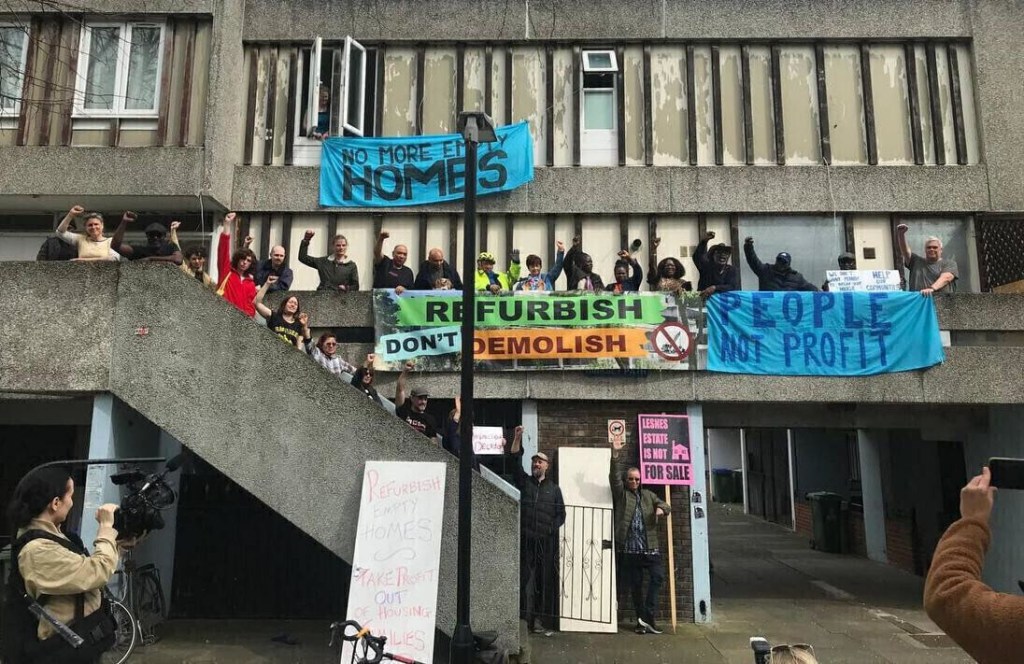
But this is another David and Goliath fight in a rigged system. As OnLondon broke a few weeks ago, Thamesmead is being touted as one of the government’s ‘New Towns’, a flagship policy to deliver hundreds of thousands of new homes, which will require the demolition and redevelopment to go ahead. Peabody are already a fair way into their regeneration plans.
Where are the residents’ voices and needs in all of this? RealMedia spoke to residents last year, who were several years into their fight already, and they were exhausted and dejected. “It’s not good not knowing where you are going to live tomorrow”, one resident shared with journalist Sul Nowroz.
Peabody are offering to buy their homes at “market value”, but of course that value is shaped by the long-neglected state of Lesnes by various landowners and landlords over the decades. So, the offers some have received are well-below the market rate new-builds on the same land will fetch. They’re also too low to enable any of these residents to continue living in the local area – their home area.
Same old story
Yet again, people’s lives, local community networks, and their love for their homes and neighbours are viewed as completely irrelevant to wider planning priorities. Obstacles to planning, even. Just like Heygate in Southwark, just like the Aylesbury estate in Walworth, just like our Coal Board estate in Leeds. Social relationships and thriving communities broken by landowners and landlords without a second thought. Cherished, iconic homes degraded and then demolished.
This is the familiar pattern I document in my book Eviction: A Social History of Rent – for more than 150 years, ordinary renters have been seen by political leaders, housebuilders, investors, and industry as moveable masses, encouraged to make homes, then evicted and displaced in frequent cycles. State-sponsored displacement has been packaged as progress since Victorian slum clearances, demolishing communities and building “better” houses while treating tenant (and some homeowner) lives as expendable.
Why this case matters
The Lesnes story shows more than many others that there aren’t clear goodies and baddies in our eternal housing crisis. Peabody is a social landlord charging ahead with the destruction of the Lesnes community, not your usual speculator type. The residents facing eviction are homeowners as well as renters.
Such dynamics reveal the deeper truth about how our housing system actually works. Housing authorities have long treated people and houses as detached concerns, lacking the incentives or the means to keep communities together. The two-part logic that has characterised the British rental sector for over 150 years applies even to homeowners facing compulsory purchase: first, that people merely occupy properties, so their personal lives are irrelevant to what is legally someone else’s (or the state’s) planning priorities. Second, that interdependence between neighbouring homes is “just” happenstance neighbourliness rather than essential care relationships – therefore irrelevant to housing planning and management.
Honestly, every day now there seem to be more cases I should add to this record of screwed-over tenants – and now homeowners too (just like the leaseholders in the Kirkby towers from my previous blog post). The Lesnes case shows how displacement-as-progress continues to steamroll over communities, regardless of tenure type.


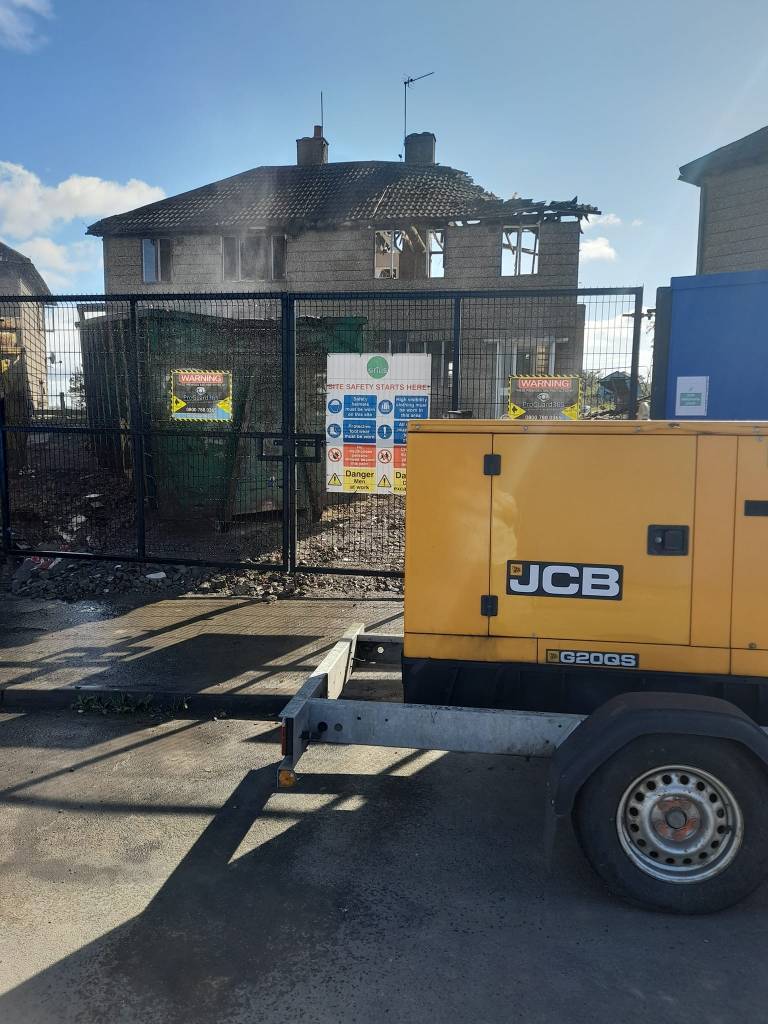


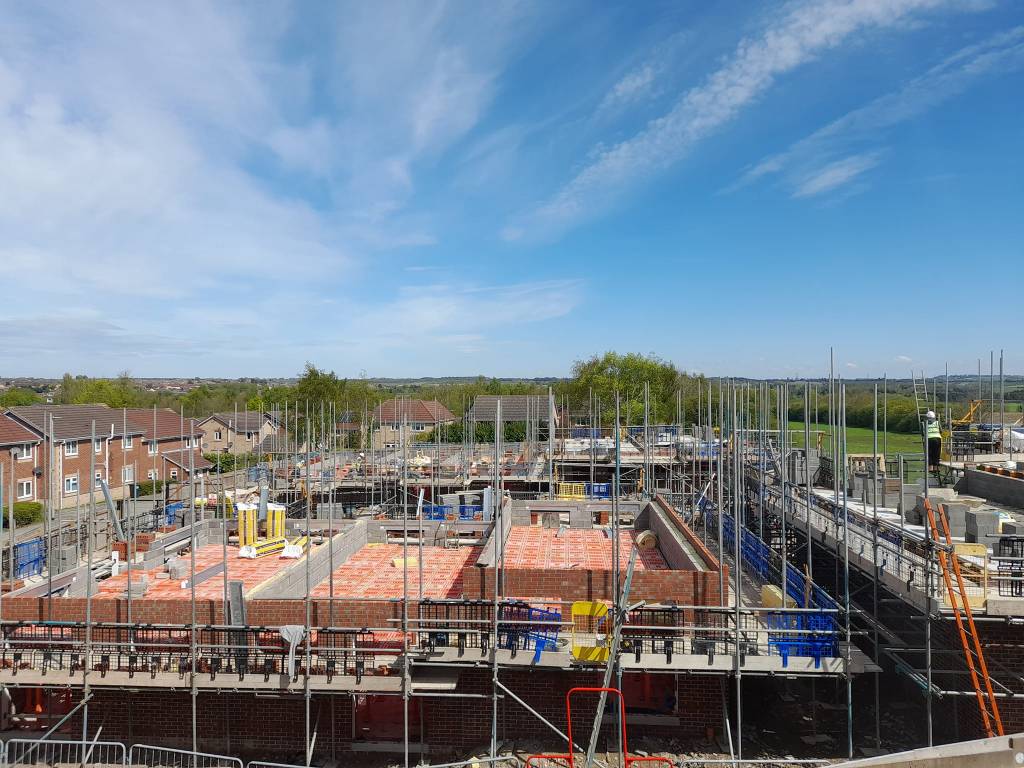

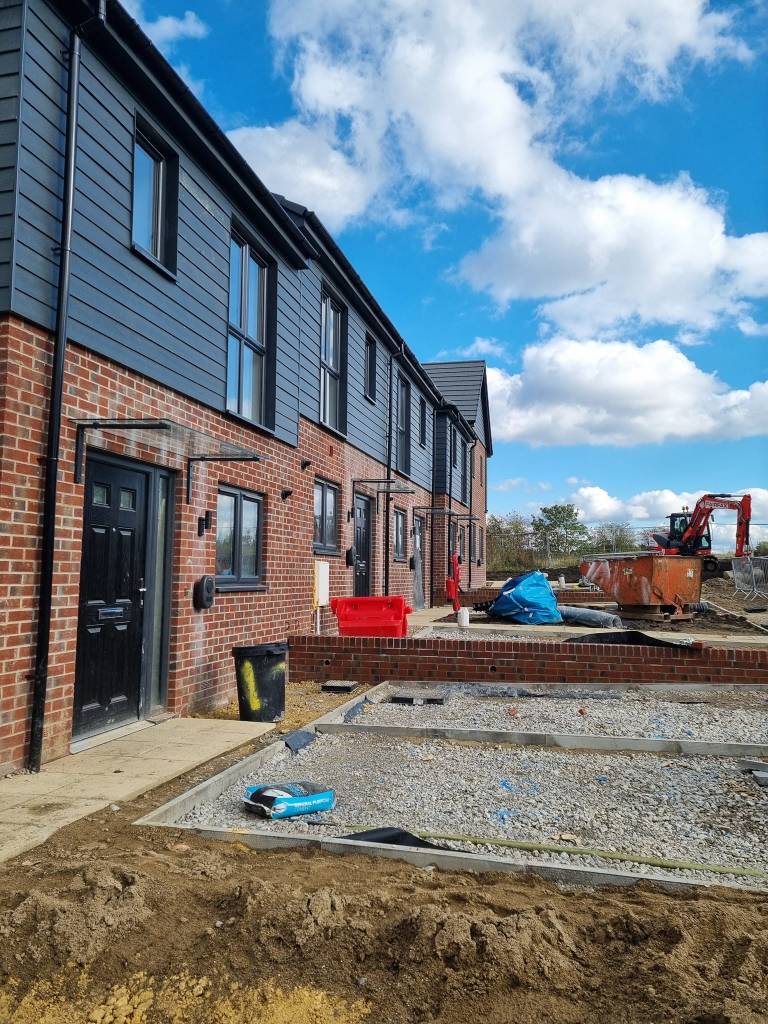


 #SaveOurHomesLS26