‘Women at the barricades’: why women always lead the fight for housing justice

Over the weekend, I attended The World Transformed gathering in Hulme, Manchester, and it’s been a phenomenal learning experience. The agenda was packed with housing panels and discussions – ‘Gentrification is Class War’, ‘Winning Rent Controls’, ‘Rent Strike as a Weapon’, to name a few. There were some common themes that will surprise absolutely no one working on housing right now: 

  • Social housing and temporary accommodation in Britain and Ireland is in a ‘disastrous’ state
  • Public housing tenants are expected to be grateful for whatever’s provided
  • Tenants are isolated – which is a tactic not an outcome 
  • Tenants are mobilising, resistance is growing, and history matters

There are so many crucial issues to explore here – the intersections of race, class, and gender in the housing ‘crisis’*; the historical roots of tenant isolation; the role of mutual aid networks – and I hope to get to them in future posts. For this post, I want to focus on the last theme: that tenants are mobilising. Not least because it speaks directly to our Save Our Homes LS26 campaign. Specifically, the question of: who is doing the fighting, and why? 

*not a crisis when it’s been the norm for more than a century

Leading and sustaining tenant resistance

Across the weekend, the prominent role women have played in leading or sustaining the long fight for housing justice was very clear, both historically and today.

First, the women-led Glasgow Rent strikes of 1915 were a frequent reference point. Panellists on the ‘Winning Rent Controls’ discussion cited these strikes as the prime example of what mass action could achieve today. In Saturday’s ‘The Rent Strike as a Weapon’ session, René Moya of the Los Angeles Tenants Union said they even have the 1915 Glasgow activists printed on t-shirts as inspiration to members. (Unsurprisingly, it’s also the first case historical case study in EVICTION, my book about Save Our Homes LS26 and the long housing crisis).

In short, this strike – led by Mary Barbour, Helen Crawfurd, and the Glasgow Women’s Housing Association – saw 25,000 tenants withhold rent from war-profiteering landlords who massively hiked rents and evicted with impunity, particularly across 1914-1915. Resistance began at the grassroots, with women establishing neighbourhood lookouts for bailiffs and pelting them with flour and wet washing to prevent evictions. Then they took it to the courts. When landlords tried to prosecute a handful of tenants, thousands protested outside – “Mrs Barbour’s Army”, as they were nicknamed. 
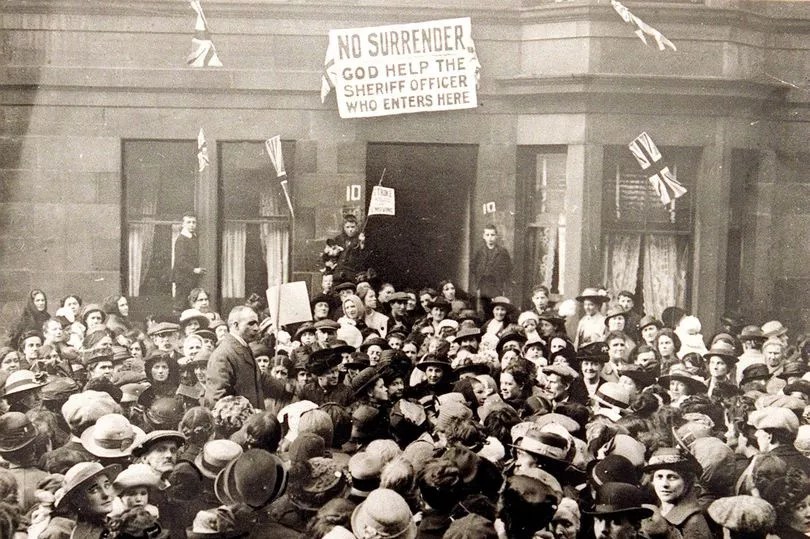
Glasgow Rent Strikes, 1915

Similar but smaller scale strikes and protests were happening across Britain at the same time (including Leeds!), but it was the Glasgow mass action that forced the government into changing the law. The 1915 Rent Act froze rents at pre-war levels and making eviction harder. A huge win!

Elsewhere in the TWT festival, I learnt about an equally impactful mass strike in 1970s Ireland. On Saturday evening, the Irish tenants’ union CATU screened ‘The Rent Strike’ documentary, focusing on the 1970-1973 mass rent strike across the country. This movement emerged following the government’s unrelenting implementation of deeply unjust rent rises. Tenants formed the National Association of Tenant Organisations (NATO), which went on to lead 350,000 striking social tenants into victory: rent reductions and the recognition of NATO as their official representative. 

While men like Matt Larkin Snr, head of NATO, led negotiations and dominated headlines, CATU’s oral history interviewees revealed that it was the women who went out every week, collecting rents and subs, women ‘who were at the barricades, women out there with their prams’. They knew the neighbours, knew the neighbourhoods, shared support, resources and information. They kept it going.

Then, at the ‘Public Housing for All’ panel on Sunday, Manchester-based social housing tenant and activist Thirza Amina Asanga-Rae shared her story of being forced into action. She’d moved into a 2-bed terraced social house in Moss Side (with two sons and one daughter, she had to sleep in the living room). Urgent repairs went ignored and unfixed for years. When the housing association eventually took action, the repair job was so shoddy that, shortly afterwards, parts of ceiling fell on her head while she was cooking in the kitchen. Thankfully her children were upstairs at the time.

Enough was enough. Asanga-Rae joined GMTU as an organiser and now sits on the Manchester Social Housing Board Commission as well as standing as a local Green Party candidate – affecting change for other social housing tenants like herself.

Thirza Amina Asanga-Rae (second from right) invited Manchester Mayor Andy Burnham (centre) to visit and witness poor social housing conditions in Moss Side in 2023. Photo credit: Moss Side Tenants Union.

Three examples, each around 50 years apart – yet with similar patterns: women facing the full force of housing insecurity and having to fight for basic rights and decent living conditions. To this list I could add the East End rent strikes in the late 1930s, or those featured in EVICTION: the Abercromby rent strikes in Liverpool in 1968-9, the Kirkby rent strikes in the early 1970s, and the mass protests in the 2010s for the New Era Estate in Hoxton and Focus E15 in Newham. Not forgetting our Save Our Homes LS26 fight in Leeds.

All women led or women sustained. Many of them intersectional; fights that have reflected the compound and distinct challenges that housing precarity inflicts on working-class women, women of colour, migrant women, and women with disabilities (I’ll return to those intersections in future writing).

Why women?

This pattern of leadership is part of a tradition of women’s political struggles. Working-class women, time and again, organising in kitchens, living rooms, playgrounds, and gardens before taking action to the streets. They do this because they must, as women face the full force of housing insecurity.

First, there are the economic pressures. Women are twice as likely to manage household budgeting in heterosexual relationships, which means when rents spike or eviction notices arrive, it’s women scrambling to make the numbers work. Women pay a larger proportion of their income as rent, so they feel every increase more acutely. And nowhere in England can a single woman on average wages afford to privately rent – trapping many in unwanted shared arrangements or unsafe relationships, especially when domestic violence refuges remain insufficient, underfunded, or completely inaccessible. These economic realities aren’t new – in fact, many (like the gender pay gap) were far worse in the past.

But it goes deeper than household budgets. As I show in EVICTION, housing insecurity itself is additional care work that has always landed disproportionately on women: searching for new homes that meet all family needs, managing school disruptions, re-settling children, switching healthcare providers, endless letting agent paperwork, and the physical labour of packing up an entire household. In other words, just another set of chores on top of the cooking, cleaning, and caring women already shoulder.

And to compound those challenges, rent hikes and evictions don’t just upend individual households, they destroy everyday mutual aid networks – the safety nets – that women sustain and entire communities depends on. The neighbour who picks up your kids from school when you’re running late. The friend down the street who lends you their car because you don’t have one. The elderly relative nearby who gets daily visits and company.

These cross-household care relationships – for children, for the elderly, for each other – are essential safety nets, especially when the state won’t provide or fund sufficient healthcare, childcare, elderly care, or secure housing to allow people to live with dignity.

When communities are dispersed through eviction or relocation, these networks are broken. But it’s no accident. Tenant isolation isn’t a side effect of housing policy – it’s by design (which was another key theme from TWT: landlords and housing managers consistently break up community networks, scatter so-called troublemakers, and thereby weaken collective resistance).
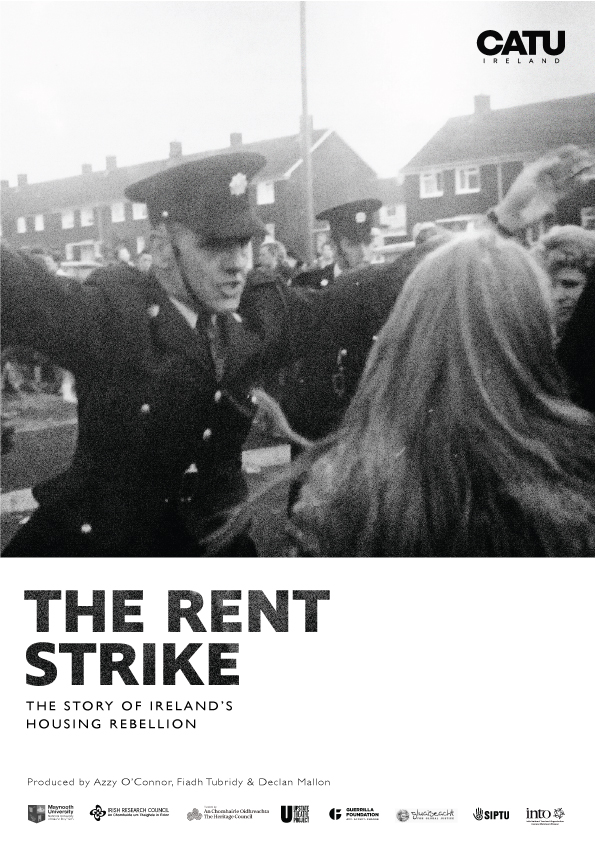
Credit: CATU

None of this is new. From the 1915 Glasgow strikes to the 1970s mass strikes in Ireland, to today’s campaigns, the pattern holds: housing insecurity is gendered, and women keep having to fight the same battles because the system keeps forcing families to live in abysmal conditions with unaffordable rents, or it keeps turfing them out and breaking communities apart. Thanks to the TWT, I now have even more examples to add to my growing historical list. (And I always welcome more – share them via the contact page!)

In the meantime, you can watch CATU’s “The Rent Strike” excellent documentary here for just £4.50: https://catuireland.org/documentary/


Corporate landlords destroying Kirkby and Dorset communities

What links two tower blocks in Kirkby, Merseyside and a rural chocolate box cottage village 265 miles away in the Bridehead estate, Dorset?

Short answer: Faceless millionaire investor landlords and powerless tenants.

These two communities are seemingly worlds apart in socio-economic status and surroundings. The Kirkby community of renters and leaseholders live in two 15-storey tower blocks originally built in 1963 to house families relocated by slum clearances and then regenerated in 2007. The Littlebredy Dorset community live in picturesque cottages on a rural 2,000 acre private estate which includes a 19th century regency Manor House and pretty waterfall.

Yet both communities have no control over what happens to their homes and no idea who their landlords are.

Kirkby’s tower blocks are owned by a complex web of investors with a property portfolio worth hundreds of millions (if not billions) between them. Leaseholders and tenants in these towers are set to be mass evicted any day now as their homes are not fit to live in.

Littlebredy’s new landlord is a rural property specialist which, though only founded in 2016, owns land the size of Preston and £350 million worth of property assets. Littlebredy tenants have heard rumours eviction may be coming down the line; one resident has already been booted out.

As Save Our Homes LS26 learnt the hard way when we fought our mass eviction by Pemberstone across 2017-2022, tenant powerlessness and speculative investor unaccountability are baked-in features of Landlord Britain.

This blog post untangles some of the corporate interests sitting behind the Kirkby and Dorset investments to expose the utter absurdity of millionaires raking it in without having any apparent legal obligation to keep their tenants informed, secure and – in the case of Kirkby – even safe in their homes.

I’ve been following the Kirkby story for several weeks and each time it hits the news, I’ve ended up down a new research rabbit hole on Companies House. I’ll never get to the bottom, so here’s what I’ve learned so far.

The Kirkby Towers Story

Originally named Oak and Cedar Towers, Beech Rise, Willow Rise were commissioned by Liverpool Council and built along with six other blocks in 1963. The development was part of a massive council housebuilding programme in Kirkby designed to function as overspill for Liverpool slum clearances. Oak and Cedar Towers, and their six sister blocks, survived until the early 2000s when Knowsley council earmarked the area for regeneration. Refurbishment and renaming to Beech and Willow was completed in 2007. Flats apparently sold like hotcakes… But whoever bought them didn’t seem to care too much for building maintenance.

Willow Rise, foreground and Beech Rise, background. Image: Google.

Less than two decades later, the towers’ private-rent and leaseholder tenants have been told they’ll finally be evicted after a drawn-out battle trying to get someone – landlords, the freeholders, the building owners, the management company – to take responsibility for addressing dangerous conditions that plague the towers. These conditions include: water leaks onto electricity boxes causing frequent black outs; out-of-service lifts trapping disabled residents inside the 15-storey buildings; malfunctioning fire alarm systems; holes in the walls; and chronic damp. Both buildings have been identified in a post-Grenfell inspection to have wooden cladding and wooden balconies, rendering them unsafe in the event of a fire.

Merseyside Fire and Rescue Service have issued multiple enforcement notices against the property over the years. Since at least 2020, MFRS have insisted that the building needs a “waking watch” of 24 hour patrols to alert residents to any fire. Knowsley Council had to implement that waking watch recently, costing around £400,000 so far, to ensure tenants could stay in their homes while some resolution was found.

An urgent sense of responsibility, however, seems not to have been shared by various corporations involved with the towers since refurbishment – a motley group of property investors shrouded by acronyms and meaningless gobbledegook: LPC [Legendary Property Company] Living, Parklands Management, Rockwell (FC100), Grainger, T R Marketing, and Dempster Management Services. Who sits behind these organisations?

LPC Living regenerated the estate around 2007, calling it the Parklands Scheme. Associated company Parklands Management was then appointed as the resident management company and took responsibility for contracting a management company (yes, a different one) to oversee maintenance, repairs and tenant issues. LPC Living and Parklands Management are associated because they shared top-level staff in common. Simon Ashdown, for example, is Director of LPC Living and also directed Parklands Management Company until 2014, tying LPC Living personnel to the company long after LPC completed the development in 2007.

One financial beneficiary of LPC Living Ltd is millionaire tycoon Pervaiz Naviede and the Guernsey-registered Pervaiz Naviede Trust – which owns LPC and had a property portfolio worth £58.3 million in 2015 when they sold it to another property investor Grainger. A PrivateEye database of tax-haven landowners shows Sarunas Properties Limited acquired the freehold of one of the tower block flats in 2010 – number 39 Willow Rise[1]. Sarunas Properties Ltd is owned by the Pervaiz Naviede Trust (PNT), suggesting that LPC/PNT/Naviede had financial interests in the tower blocks long after the end of the 2007 redevelopment.

So, what Willow and Beech Rise interests transferred to Grainger in the PNT property portfolio sale in 2015? Who knows! That’s the point. Distancing through faceless corporations makes doing business and generating profits a lot easier. As “publicity-shy” Naviede himself said in a rare interview back in 2008: ‘We do it [regenerations] because we make money out of it’. His longtime associate, then-LPC Chairman Warren Smith agreed: ‘We are not a charity’. 

For its part, Grainger is the UK’s largest listed residential landlord and had a net income of £31.2 million in 2024. Google searches for “Grainger PLC” and “Willow Rise” or “Beech Rise” show the property investor has owned multiple flats in the two towers over the last decade (raising the question about whether developer LPC Living / The Pervaiz Naviede Trust might also have owned multiple flats which transferred to Grainger in the 2015 sale?). Anyhow, Grainger has been trying to auction many of them off for peanuts in recent years – presumably evicting tenants in the process.

If you think one multi-millionaire tycoon and one multi-million pound mega-landlord is enough for beleaguered residents, then I’m sorry to say that another property tycoon has links to the decrepit blocks. Billionaire Tory donor Vincent Tchenguiz and his equally wealthy brother Robert are named beneficiaries of Willow and Beech Rise’s “Head Lessor” company Rockwell (FC100) Ltd, registered in the Virgin Islands.

While Rockwell made noises about looking at its responsibility over maintenance and repairs, it concluded that the management company alone has “responsibility for managing the buildings and collecting and spending service charge money”. Hmm.

A head lessor is essentially the main landlord who holds the head lease and then grants subleases for individual units within that property. Lawhive describes a head lessor as ‘generally’ overseeing responsibilities typical of a usual landlord:

  • The management of communal areas
  • The collection of service charges
  • The arrangement repairs and maintenance

If Rockwell declared it was not responsible for any management or maintenance, it seems to have just collected service charges. Nice ‘work’, if you can get it. And all perfectly legal.

The Tchenguiz property empire has form in shirking any moral duties over their properties, too. The Guardian reported in 2018 that Vincent, via another of his property companies, told residents of a Grenfell-style clad tower that they had to cough up £31,000 each for the cladding removal costs because his company, the freeholder of the cladded building, was not responsible. (Again, standard practice. Our ex-landlord Pemberstone tried to do the same to leaseholders in two of their cladded investment properties in Manchester in 2018-19… but lost the case at court).

So, what about the Kirkby towers’ contracted management company? That was, most recently, Dempster Management Services. Dempster terminated their own contract in May 2025 because of the scale of the work required (and, of course, because of the scandal erupting around the towers).

While Dempster came on board late in the game when the building was already in a dire state, they would have gone in with their eyes open and aware of the urgent to-do list. Yet, residents have been scathing about Dempster’s role in fixing clear hazards to life in the building. Resident Phil Noonan shared on Facebook in June that the company withdrew support for lift repairs at one point, until they were threatened with civil lawsuits.

For their part, building owners T R Marketing are ghosts. The BBC reported that the Salford-based company paid just £5,000 for the freehold in 2022 and have been dormant and silent since. Maybe they’re just embarrassed at getting such a duff deal. Maybe.

The Dorset story

Littlebredy. Image: Google.

The story of Littlebredy in Dorset is less convoluted. Residents of this tiny village have been thrown into turmoil after the 2,000 acre estate it sits on was sold to investment company Belport Ltd in May after being in the hands of one family for 200 years. There are 32 properties on the estate, 23 of them residential lets. Belport netted it all for around £30 million.

Both The Guardian and The Telegraph reported in June that the new owners booted out one tenant-of-21-years and unceremoniously padlocked access routes to some parts of the manor estate, cutting off a long-standing rambling route. (In response, around 60 protestors staged a Right to Roam trespass on the estate).

Requests for information and reassurance from the new landlord have so far been largely ignored. The company issued a mealy-mouthed statement denying plans for eviction and stating their intention to refurbish all of the homes in Littlebredy ‘which may entail disruption for tenants in some cases’. But this is not the reassurance that it sounds like.

While retrofitting outdated houses to modern energy standards is essential, Belport is a private equity property investor and will want to see decent returns on their assets and any refurbishments – returns that decades-old rolling tenancy agreements will not provide. To paraphrase LPC Living’s wisdom circa 2008: Belport is not a charity.

How might they go about this refurbishment? The company has already shown their hand by evicting one resident without concern for her long-established life and social connections in Littlebredy. The ex-tenant Christine McFadden, shared on social media that she felt ‘devastated about being chucked out of our home which we have rented for 21 years. Went there today to pick up a few bits and pieces and the guys from Belport were on the doorstep and we had to ask permission to go into our house to collect a few bits and pieces‘. Her old home is now an estate office.

Judge a landlord by their actions, not by their statements. Residents are right to fear rent hikes, the sale of their homes, the closure of permissive paths, and being unceremoniously evicted. It’s the property speculation operating model.

Nowhere safe from speculation

We know this all too well in Oulton. [**Plug warning**]… As I document in my new book Eviction: A Social History of Rent (out this September!), unnamed speculators hiding behind offshore companies bought my parents’ prefab estate for peanuts from the National Coal Board in the 1980s. Coal miner tenants had no idea who their landlord was. The company hiked rents and ignored urgent repairs while keeping their distance through managing agents – resulting in the mass flight of tenants who just couldn’t stand living in increasingly dire conditions.

Resident looks out of his rotting window on our Oulton estate in 1989. Image: Rothwell Advertiser.

These speculators then sold it on for profit to investment company Pemberstone in 1997, who ran it for more than 20 years through different management agencies and contractors. None of the ageing Airey prefab estate was structurally refurbished. Repair requests were ignored, sometimes for years at a time; contractors ever-changing and unconcerned with resident preferences for their homes. When the estate was declared essentially uninhabitable in 2021 due to (refurbishable) structural concerns, hundreds of low-income residents – including my parents – were evicted and the estate demolished. 

So, you see, none of this is new. Speculator landlords have existed for decades – centuries even. The fact that they’ve historically overlapped with slum landlords is no coincidence. There are few ways a landlord of a low rent estate can make money without hiking rates, scrimping maintenance and/or evicting to redevelop.

While the condition of Willow Rise and Beech Rise towers is particularly grim, their story reflects the broader state of Britain’s housing emergency: poor property management resulting in uninhabitable, dangerous, living conditions. Tenants and leaseholders are left out on a limb, fighting to get basic safety work done. And for both Kirkby and Littlebredy, wildly rich investors sit far behind their lucrative properties, with layers of subsidiary companies, managing agents and contractors – distancing their accountability and raking in profits.

The end of the leaseholder system can’t come fast enough. But the ability of landlords to hide behind faceless companies also has to also end. Tenants need to be able to hold the individuals profiting from their rents or service charges to account – whether they are millionaire tycoons or accidental landlords. Otherwise, we’re only going to see more and more cases of property decline, raised rents and evictions. Kirkby and Littlebredy together show that nowhere – city or countryside – is safe from speculation.

Notes

[1] In further ‘rabbit hole’ discoveries, it turns out 39 Willow Rise was sold for £94,770 in March 2007, the year of regeneration… and then for just £46,515 in 2015. Housemetric highlights that this sold price has been marked by Land Registry as Category B: Additional Price Paid Entry, which could be due to a variety of reasons ‘such as the sale being a buy-to-let purchase, a repossession or a transfer to a limited company. When Land Registry suspects that a sale does not reflect full market value (e.g. part-ownership or right to buy), these transactions can be flagged as well’. Did Sarunas Properties Ltd sell or transfer it in 2015? Whoever owns it they don’t want it any more; 39 Willow Rise was due to be auctioned on 25 July 2025 but has been withdrawn.

Is short, safe and healthy Temporary Accommodation too much to ask?

For my first post under the banner of our new mission to support other tenant activists and campaigns, I want to spotlight a new report that should be read by anyone worried about housing insecurity: JustLife’s A Better Vision for Temporary Accommodation’.

Temporary Accommodation is the home no one actively wants to find themselves living in, but’s the last safety net we’re entitled to if we find ourselves suddenly evicted and homeless. So, we all have a stake in making it decent and dignified.

On Monday, I was lucky enough to attend the Westminster launch event for this report and hear the inspirational lineup of speakers outline the urgency of the change needed to protect homeless individuals and families. 

Many MPs were present at the event, including the Paula Barker, Labour MP for Liverpool Wavertree, Siobhain McDonagh, Labour MP for Mitcham and Morden and Chair of the APPG for TA, which was great to see. They’re committed to advocating on behalf of families stuck in TA everywhere, and stated they’ll take Better Vision’s recommendations back to the government – meaningful change now needs to follow.

Here’s all you need to know about the event and report:

Who are JustLife?

JustLife provides healthcare, housing and wellbeing support for people who find themselves having to live in temporary accommodation in Manchester and Brighton. It’s also a nationwide learning and advocacy organisation promoting the (apparently not obvious) need to make temporary accommodation short, safe, and healthy. 

If you haven’t heard of JustLife before now, that’s probably because you’ve not been faced with living in what passes for Temporary Accommodation (TA) in this country. TA lodgings can be private rental or local authority flats or houses, B&B rooms, hostel rooms, refuges. They are run by a diverse bunch of landlords – council, private and charity – and they’re often bottom of the priority list for maintenance so are in a varied state of disrepair.

TA life and numbers

Some of the conditions that speakers drew attention to in Monday’s event are just horrendous: chronic damp and mould, shared rooms with shared beds, no privacy, no kitchen, and no play or homework space for children. 

When I was researching for my book Eviction, I learned that 279,390 people were living in TA by the end of 2023 – pretty much equivalent to the entire population of the city of Nottingham. The majority two-thirds of these statutorily homeless people are women. And one of the main reasons women end up in TA is because of domestic violence, followed closely by eviction. Many women flee with children, and many other TA households are made homeless as family units; Better Vision highlights that today, 164,000 children are living in TA (up 15% in a year).

It was only last year (!) that the government updated guidance to state that cots should be given for homeless families with children under two (a change achieved by advocacy from JustLife, Shared Health and others). 

As a recent mum myself, I remember safe sleeping arrangements (i.e. cots, separate space, firm mattress) being drummed into me as a parental care essential from well before my little one was born. It’s listed as one of the safety and care basics alongside feeding and comforting your child. The fact that it took until 2024 for the government to recommend the provision of cots as standard part of a homeless family’s emergency housing package is pretty appalling. (And, I think, a reflection of how few people with experience of TA get to feed into policy-making around TA amenities).

Leeds TA Stats
According to government data, between October and December 2024 there were 670 people in TA in Leeds .
Shelter’s research of a ‘snapshot’ of homelessness on one day in Leeds in December 2024, put that number at 806, with 379 homeless children. 

One of the key takeaways from the day was also that the suffering of families in TA is far from temporary. Many end up living in these conditions for years – that’s if they’re not packed off to ‘Out of Area’ placements, torn away from community networks. And the negative impacts of these circumstances can be lifelong.

Lack of cooking facilities and safe play spaces means that children living in TA are suffering from rickets, tooth decay and development delays, as well as severe mental health problems. JustLife’s report highlights that at least 74 child deaths can be linked to unsafe and unsanitary TA since 2019. How many of those individual stories have we seen in the news? How many have led to systemic change in how local authorities provide for homeless families with children? There’s a reason people living in TA are called the ‘hidden homeless’.

JustLife’s Better Vision

The Better Vision report, overviewed by author Morgan Tebbs, presents a range of holistic solutions that sit under four pillars: 

  1. Increase the supply of affordable housing
  2. Prevent future and repeat homelessness
  3. Improve standards in TA
  4. Provide better support for homeless households 

It’s deliberately wide because so much of what’s needed to make TA short, safe, and healthy has to come from departments and actors beyond a single landlord. The recommendations won’t be new to the housing insecure, though… many speak to key issues we and others have raised for years, including:

  • Create more genuinely affordable homes and stop selling off social and council houses – end Right to Buy! This really doesn’t need explaining.
  • Commission research into rent control. As we’ve raised here time and again, private sector rents shouldn’t be allowed to just spiral upwards, well beyond renters’ incomes. High rents force people out of their homes and into TA or the streets.
  • Apply the Decent Homes Standard to temporary accommodation (because some landlords need to be forced to apply minimum health and safety standards to TA). Under the Renters Rights Bill, this standard will finally apply to private rental sector homes as well as social – it’s unacceptable that TA is left off that list. 
  • Improve coordination between councils who are inadvertently switching homeless families through Out of Area placements (yes, that’s right, two councils sending and receiving similar numbers of homeless families moved about like chess pieces).
  • Increase the number of housing officers in councils to improve officer caseload numbers (reducing it to a number in the 10s, rather than literally unmanageable caseload of 100s – Morgan spoke of one London council giving an officer around 300 cases to manage) and enhance their training to better deal with trauma-affected people.

There are many more great recommendations in the report, as well as important testimonies of interviewees with lived experience of TA, so do give it a read and support their calls for change.

Activist Women

I recommend checking out the amazing work of the Magpie Project, too. The Magpie Project are an inspirational group of women in London’s Newham, working hard to make sure pre-school children and their mums have somewhere safe and fun to play and grow while in TA. 

Magpie’s Change and Advocacy Lead, Gifty Amponsah, was at the event and gave an impassioned and deeply personal speech about the organisation’s current campaign for ‘No Child in a Home Without a Kitchen’.

Too many families, Gifty explained, are placed in hostels without cooking facilities, causing nutritional and developmental crises in children that affect them for the rest of their lives. It should be a basic right for a child to have the comfort and nutrition of a home cooked meal – as Gifty says, this is about supporting the emotional needs met by family cooking and eating, as well as nutritional needs. Read more about their vital work and consider donating, here: https://themagpieproject.org/about/, and you can sign their petition.

Congratulations to all at JustLife – especially Simon Gale, CEO, Christa Maciver, Director of Campaigns & Social Change, and Morgan Tebbs, Influencing Coordinator – for such excellent speeches and the successful launch of an important report (and thank you for including me in the event!).

I hope Better Vision has the impact that people living in TA deserve.

~ Jess